
The Maui GMO moratorium brought questions about farming, pesticides and local decision-making to the ballot in 2014. Voters approved it, but the measure was later blocked in court. The legal outcome didn’t end the wider debate over agriculture on the islands.
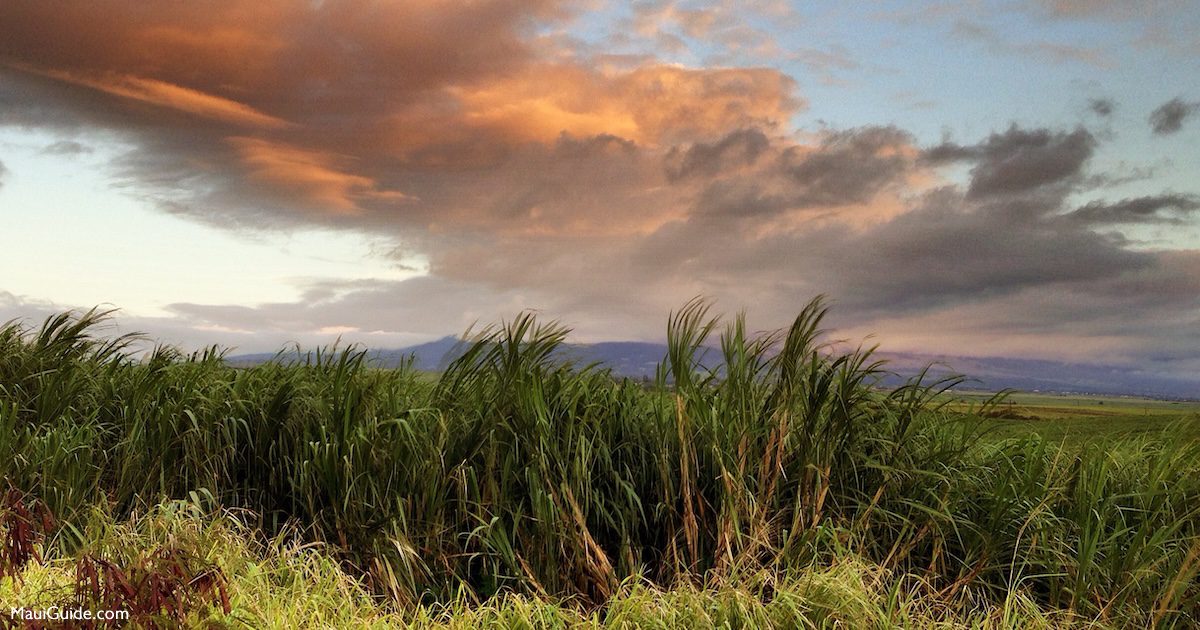
Historical Maui sugarcane fields photographed in 2014.
This historical article brings together our October 2014 pre-election coverage and October 2017 follow-up. It corrects outdated claims and adds primary sources so readers can distinguish the vote, the court decisions and the separate questions about food and pesticide safety.
Why the Maui GMO moratorium mattered locally
Maui is about far more than swaying palms and tiki-lit lūʻau. Agriculture, land stewardship and the livelihoods of farming families are part of the island’s story too. Hawaiʻi’s warm climate and long growing season also made it attractive for developing and testing seed crops.
For residents living near fields, the debate wasn’t simply an abstract argument about a supermarket label. Our original coverage described concerns about pesticide exposure, disclosure, gene flow, control of seeds and the future of smaller farms. Other residents worried about jobs, farming restrictions and the consequences of a county ban.
Those are different questions, and they deserve separate evidence. A conclusion about the safety of a food doesn’t by itself settle concerns about a particular pesticide application, land-use practice or farming business.
What is a GMO?
GMO commonly refers to an organism whose genetic material has been changed using genetic engineering. Plant traits can include resistance to insects or disease, tolerance of certain herbicides, or changes in nutritional characteristics.
The FDA’s agricultural biotechnology information explains the technology and states that GMO foods are as safe and healthful as comparable non-GMO foods. Our older articles’ broad suggestions that these foods cause sterility, cancer or harm to livestock shouldn’t be treated as established facts.
Genetic engineering also isn’t a synonym for glyphosate. The crop trait, the herbicide or insecticide used, the application method and the exposure involved are separate subjects. Assess specific claims rather than assuming every crop and every farming practice has the same benefits or risks.
Rainbow papaya was part of the discussion too
Our 2017 article highlighted Dennis Gonsalves and the team behind virus-resistant papaya. The USDA Agricultural Research Service’s account describes the development of SunUp and Rainbow papaya in response to papaya ringspot virus. The varieties were commercialized in 1998.
That example helped explain why some growers supported biotechnology. It didn’t mean every farmer agreed about every crop, pesticide or proposed county rule.
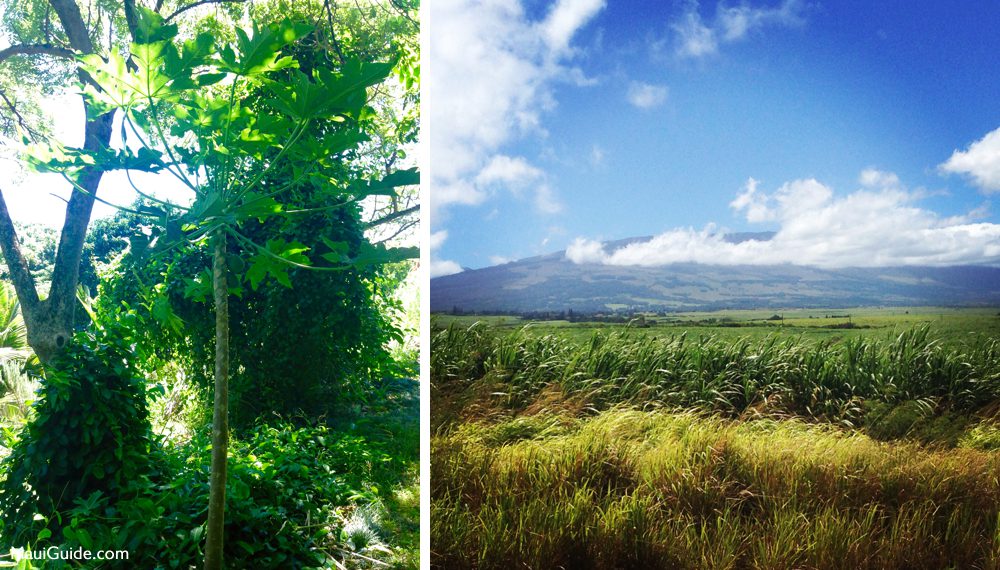
A papaya tree, variety unidentified, from our 2016 visit, alongside Maui sugarcane fields photographed in 2014.
The 2014 vote and the court outcome
Before the election
The SHAKA Movement, whose name refers to Sustainable Hawaiian Agriculture for the Keiki and the ʻĀina, promoted a moratorium on growing and testing genetically engineered organisms in Maui County pending the studies and conditions described by the initiative.
Our October 2014 article discussed the upcoming November 4 vote, competing claims about jobs and farming, and supporters’ requests for more health and environmental review. It also linked the 2014 ballot initiative record. That election is historical, rather than an upcoming choice for readers today.
The original coverage reflected strong disagreement between SHAKA supporters and opponents associated with Citizens Against the Maui County Farming Ban. Bruce Douglas, Ashley Lukens, Alika Atay and Mark Sheehan were among the people discussed across the two articles. Their arguments belong to the campaign and its aftermath; they aren’t substitutes for the initiative text or the court’s reasoning.
After voters approved the measure
The federal district court ruled against the ordinance, and the Ninth Circuit affirmed the result in its November 18, 2016 Atay v. County of Maui opinion. The decision addressed preemption by federal and Hawaiʻi law.
In particular, the court found federal preemption for the ordinance’s application to certain plants regulated by APHIS, and state-law preemption for its application to deregulated genetically engineered crops. The published opinion gives the details; the county measure didn’t become the operating moratorium its supporters sought.
A preemption decision answers which government has authority to regulate in that way. It shouldn’t be turned into a claim that every farming practice is harmless, or into proof that genetically engineered food is unsafe.
The related debates on Kauaʻi and Hawaiʻi Island
Our 2014 article also covered Kauaʻi Ordinance 960, which addressed pesticide disclosure and buffer zones, and linked the Kauaʻi Agricultural Good Neighbor Program. These were separate measures from Maui’s initiative.
The Ninth Circuit’s 2016 Syngenta Seeds v. County of Kauai decision upheld the conclusion that the ordinance’s pesticide provisions were preempted by state law. Our old description of a pending county dispute should therefore be read with that later outcome in mind.
The article also discussed Hawaiʻi County’s attempted restrictions on genetically engineered crops and a challenge involving farmers and the Biotechnology Innovation Organization, called the Biotechnology Industry Organization in our older coverage. It mentioned Dustin Barca’s 2014 mayoral campaign on Kauaʻi too. Neither the election reference nor the old hearing date is current news.
What changed after our original articles?
Food disclosure rules
The old claim that the United States had no relevant mandatory disclosure standard is out of date. USDA’s bioengineered food disclosure guidance lists January 1, 2022 as the mandatory compliance date. The standard has definitions and exemptions, so it doesn’t mean every ingredient from every genetically engineered crop receives the same label.
Pesticide reporting and school buffers
For later Hawaiʻi pesticide rules, start with the state agriculture department’s Act 45 restricted-use pesticide reporting information and school buffer-zone guidance. The latter describes a 100-foot restriction during normal school hours, with a stated exception for whole-structure fumigation.
Those state requirements shouldn’t be confused with the different proposals and voluntary programs discussed in 2014. For a concern about a specific application, use current agency information about the product, site and rules.
Company names and Maui’s sugar transition
Our articles discussed Bayer CropScience, Dow AgroSciences, BASF, Syngenta, Pioneer and Monsanto. These links preserve the organizations named in the historical coverage; names, ownership and websites have changed.
For example, Bayer completed its Monsanto acquisition in June 2018. An old company name shouldn’t be presented as an unchanged current corporate structure.
The original follow-up also gave the wrong year for the end of HC&S sugar operations. Alexander & Baldwin’s 2017 filing places the final harvest and cessation in December 2016. Predictions about the future use of former cane land weren’t proof of what subsequently happened on every parcel.
Reading the original sources in context
The earlier posts drew on reporting, advocacy material and campaign statements. We retain the links below as part of that record. They represent different viewpoints and dates; linking them doesn’t establish every claim they contain.
- Center for Food Safety, an organization featured in the debate.
- Moms Across America’s glyphosate testing page, cited by the original 2014 article. It isn’t used here to establish a health effect or population-wide exposure estimate.
- The Mind Unleashed’s 2014 commentary and GMO Awareness’s definition page, preserved as historical reading rather than scientific authorities.
- MauiWatch’s 2014 discussion of the initiative and Rainbow papaya.
- Civil Beat’s 2014 reporting on the Hawaiʻi Island challenge and EcoWatch’s 2014 moratorium coverage.
The Maui GMO moratorium remains an important chapter in the island’s farming and civic history. Studying it means keeping campaign arguments, scientific findings and legal authority in view, while checking each against the right kind of evidence.

We’re a small group of full-time Maui residents that LOVE exploring and writing about what we think is the best place on Earth: The Island of Maui, Hawaii! Expect many more articles, reviews, photos and videos of Maui and all of the Hawaiian Islands. ALOHA!



0 Comments