
Puerto Rico, Alaska, Costa Rica, Nepal and Hawaiʻi have more in common than stunning scenery. They’re places where ziplining turns a view into an adventure. But the history of ziplining reaches beyond vacation thrills, with roots in practical crossings and rainforest research.
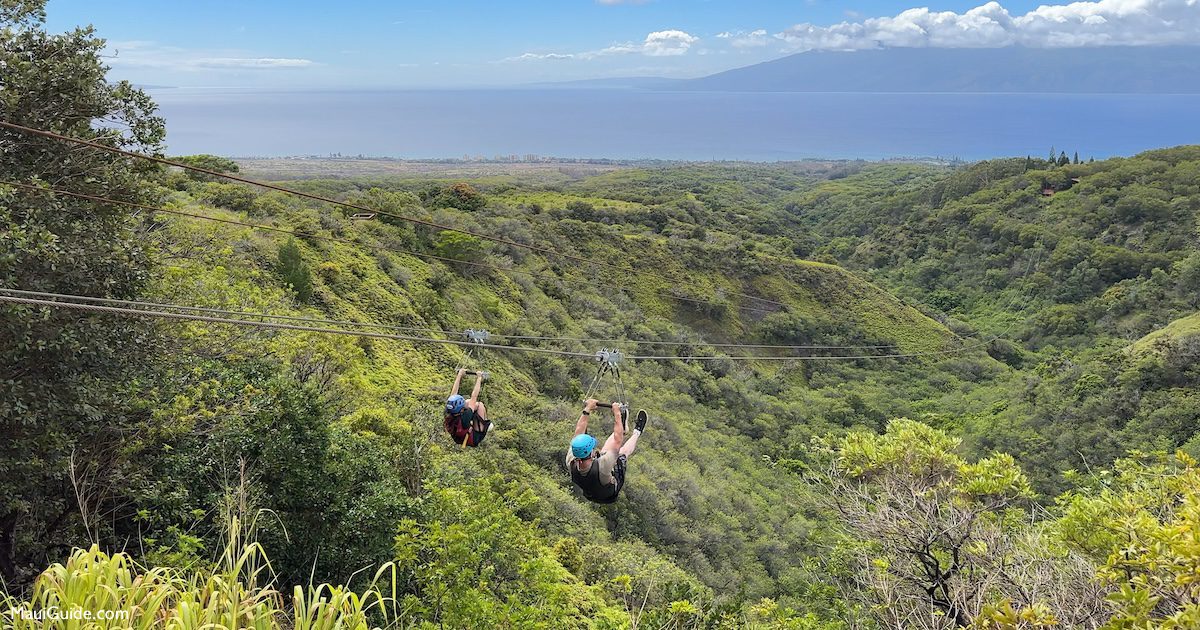
A later Kapalua zipline visit from our photo library, illustrating how the activity developed on Maui.
Before Ziplining Became a Vacation Activity
A zipline uses gravity to propel a rider along a sloping cable. The idea is simple, but modern tours rely on purpose-built equipment, braking systems and trained guides.
Long before visitors booked flights through the treetops, people used rope crossings to move across difficult terrain. Related methods, including the Tyrolean traverse, also became part of climbing and rescue work. These crossings belong to a broader history of getting people and equipment between places that aren’t easy to reach on foot.
That background makes the question of who invented ziplining more complicated than naming one person. Practical rope travel, scientific canopy access and commercial adventure tours developed for different reasons.
Rainforest Research and the History of Ziplining
American biologist Donald Perry helped open a new view of the rainforest canopy. Working in Costa Rica in the 1970s, he used climbing equipment to reach the upper branches rather than limiting his observations to the forest floor.
His 1978 paper described a portable way to access tree crowns without damaging the trees. In 1981, Perry and John Williams described an aerial rope network supported by three trees. The system allowed researchers to move through a volume of forest, rather than observing from one fixed platform.
The canopy itself was the attraction: branches, flowers, fruits and animals that were difficult to study from below. Perry later shared that world with a wider audience in his book Life Above the Jungle Floor.
From Canopy Research to Commercial Tours
In the 1990s, Canadian entrepreneur Darren Hreniuk helped turn treetop transportation into a tourism business through the Original Canopy Tour in Costa Rica. The Monteverde operator’s own history dates its public opening to 1994.
What had been a way to reach the forest canopy became an experience visitors could book. Guided tours let people travel from tree to tree and see a landscape from a perspective once largely reserved for climbers and researchers.
Zipline tours spread beyond Costa Rica to mountains, forests and other settings around the world. Their appeal combines speed, height and scenery, although the length, pace and surroundings vary considerably between courses.
How Ziplining Reached Maui
Maui has its own place in the history of ziplining. According to Skyline Hawaii’s company history, Danny and Buck Boren tried canopy tours in Monteverde in 2001. The father and son returned with the idea of bringing a similar experience to Maui.
Skyline began operating on Haleakalā Ranch in December 2002, becoming the first commercial zipline operation in the United States. Its Kāʻanapali course followed in 2007.
Today, you can compare Maui zipline locations for very different settings. A course on the slopes of Haleakala offers a different view from one near the island’s wetter North Shore. The scenery is part of the experience, so consider it alongside the number of lines.
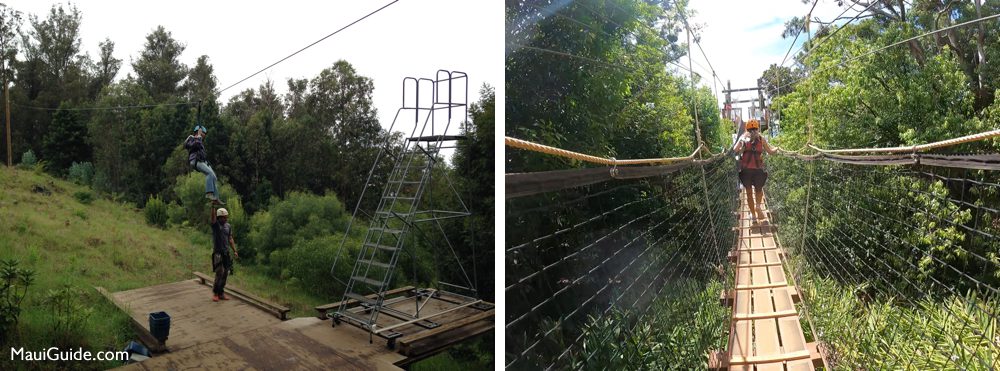
Later Maui zipline visits: a landing at Skyline Haleakalā, left, and a suspension bridge at Kapalua, right.
The Appeal of an Eco-Tour
The eco aspect of ziplining is a draw for many adventurers. Tours can offer more than thrills, giving guests a chance to learn about wildlife, geology and history while seeing places from above.
That doesn’t mean every zipline automatically has little environmental impact. Course construction, trails and day-to-day operations all matter. If conservation is part of the appeal for you, ask what the operator does on the ground, from habitat restoration to caring for native plants.
For a look at course styles and local options, see our Maui zipline guide. For your own trip, read the chosen operator’s current age, weight, footwear and participation requirements before booking. Tours differ, and a course that suits one member of your group may not suit everyone. Follow your guides’ instructions throughout the ride.
Some of Our Readers’ Thoughts
Selected comments from the original article. These reflect readers’ experiences at the time, rather than current offers or advice. Longer comments are excerpted below.
My husband and I want to have an adventurous vacation, so we’re considering signing up to go on a zipline in Maui here this coming summer.
Rhianna Hawk, 2019-02-07 (excerpt)
Ziplining is the most amazing adventure in Hawaii. There’s beautiful sites and waterfalls, beaches, and greenery that zipping through all of that under the clear blue sky makes the trip worth the while.
Scott Hill, 2019-10-17

We’re a small group of full-time Maui residents that LOVE exploring and writing about what we think is the best place on Earth: The Island of Maui, Hawaii! Expect many more articles, reviews, photos and videos of Maui and all of the Hawaiian Islands. ALOHA!


0 Comments